Riflessjoni għall-Għid il-Kbir - Easter Reflection
Omelija Sibt l-Għid
Mill-Arċipriet Dun Bastjan Caruana
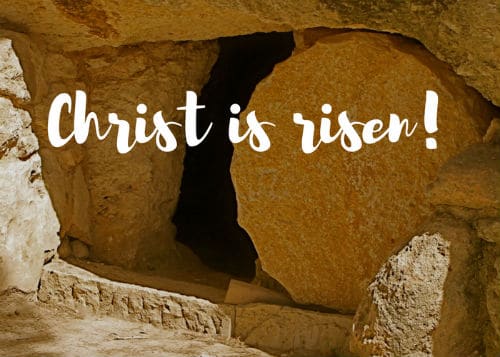
Ħdejn il-qabar ta’ Ġesu’ għandna ġrajja li qatt ma tintesa. Ħdejn il-qabar nassistu għal theżżiża, li biha kollox jinqaleb ta’ taħt fuq u jinbidel – xejn ma jibqa’ l-istess. Ħdejn il-qabar insibu sorpriżi li ħadd ma kien jistenna li se jiġru.
Inħarsu ftit lejn żewġ ġruppi ta’ nies li nsibu ħdejn il-qabar ta’ Ġesu: in-nisa, imbeżża’ u mħawda, u s-suldati, li jaspiraw saħħa u kontrol. Imma l-ġrajja tal-qawmien ta’ Ġesu’, ma’ ħallithomx l-istess: lil dawk li tmewtu quddiem il-ġrajja tal-Ġimgħa, issa ħadu l-ħajja mill-ġdid, waqt li min ħaseb li ħadd ma jista’ għalih tmewwet. In-nisa issa kellhom enerġija straodinarja, tant li marru lura jiġru jagħtu l-aħbar lid-dixxipli, waqt li s-suldati ‘qabdithom rogħda u saru qishom mejtin’. Fil-ġrajja tal-qawmien ta’ Ġesu’ naraw jitwettaq dak li qalet Marija fil-magnifiacat; ‘ Hu wera l-qawwa ta’ driegħu, xerred lil dawk li huma mkabbra f’qalbhom. Niżżel is-setgħana minn fuq it-tron tagħhom, u għolla ċ-ċkejknin.’ Mhux ta’ b’xejn l-aħbar tal-qawmien ta’ Ġesu’ ntlaqgħat bil-ferħ minn dawk vulnerabbli, waqt li werwret lil min kien fis-seta’.
Bħalissa lkoll ninsabu qrib qabar vojt, li qed iġib sentimenti differenti f’persuni differenti; ħafna nies jinsabu mnikta u qed jitmewtu għal dak li qed jiġri fid-dinja, oħrajn għadhom għaddejja qisu ma hu qed jiġri xejn u forsi għadhom jaħsbu li xejn ma jista’ għalihom. Imma ejjew niftakru f’dak li ġara l-Ħadd filgħodu kmieni, meta kollox tbiddel, ħalli dawk li huma mnikta, dawk li qed jitmewtu quddiem is-sitwazzjoni preżenti jimtlew bit-tama u l-ferħ. Ġesu’ rebaħ fuq il-mewt u diġa’ rebaħ lilna wkoll biex ngħixu miegħu. U dawk li forsi għadhom jaħsbu li għandhom tarf ta’ kollox, j’Alla jitmewtu, biex jirrealiżaw li Ġesu’ hu s-sid ta’ kollox; j’Alla jitmewtu biex Ġesu’ jkun jista’ jqajjimhom għal ħajja ġdida.
Il-lejla se niftakru fil-magħmudija tagħna, u se nġeddu l-wegħdiet li għamilna fiha. Fil-magħmudija aħna ġarrabna l-mewt ma’ Kristu, biex miegħu stajna nqumu għal ħajja ġdida. Dan smajnih minn San Pawl meta qalilna: Ħuti, ma’ tafux li aħna lkoll li tgħammidna fi Kristu Ġesu’ tgħammidna fil-mewt tiegħu? Indfinna miegħu fil-mewt permezz tal-magħmudija biex kif Kristu kien imqajjem mill-imwiet permezz tal-qawwa glorjuża tal-Missier, hekk aħna ngħixu ħajja ġdida.’ Mela, aħna, diġa’ qed ingawdu l-frott tal-qawmien ta’ Ġesu’. Diġa’ ninsabu fil-ħajja ġdida. Kuraġġ!
Iżda, nistgħu ngħixu din l-ħajja ġdida jekk kontinwament niġġeddu fi Kristu. Nibqgħu inġeddu kuljum l-wiegħda li nwarrbu l-ħażen u dak kollu li hu dlam, waqt li nagħżlu t-tajjeb u dak li hu tassew dawl. Niġġeddu billi nibqgħu nuru rispett u mħabba lejn xulxin, anke lejn min jaħsibha differenti minna. Niġġeddu jekk inħallu t-tama tagħna qawwija u nqawwu lil xulxin fil-mumenti tal-qtiegħ ta’ qalb. Niġġeddu jekk ma nintrabtux mal-affarijiet li huma sekondarji imma nibqgħu npoġġu l-prijoritijiet posthom.
It-tama ta’ ħajja ġdida hi dik li tikkaratteriża dan iż-żmien tal-Għid, b’mod speċjali din is-sena. Wara li nerġgħu lura għan-normalita’, ma għandniex niprovaw nerġgħu inġibu kollox l-isess kif kien qabel. It-theżżiża kbira li fetħet l-qabar, tixbaħ it-teżżiża ta’ żmienna u bħalma dik it-teżżiża kienet s-sinjal ta’ ħajja ġdida, hekk it-theżżiża kbira ta’ żmienna trid tkun sinjal ta’ ħajja ġdida. J’Alla l-enerġija tagħna nużawha aktar kif użawha n-nisa, li marru jiġru jxandru l-aħbar tal-qawmien. J’Alla bħalhom infittxu li nixteħtu quddiem Ġesu’ u j’Alla din tkun l-ewwel priorita’ qabel kull priorita’ oħra. Ġesu’ wiegħdna li se jiltaqa’ magħna, dixxipli tiegħu, fil-Galilea. Il-Galilea kien l-post fejn Ġesu’ kien għamlu bħala d-dar tiegħu. Il-Galilea tagħna tista’ tkun d-dar, il-familja, il-ħajja ta’ kuljum. Il-ħajja ġdida rridu ngħixuha fl-aktar mumenti ordinarji tal-ħajja tagħna.
Ejjew nawguraw l-Għid t-tajjeb lil xulxin u f’dan l-awgurju ejjew nixtiequ li lkoll insibu lil Ġesu’ ħaj fil-ħajja ta’ kuljum. Ejjew inħallu dan l-Għid jimliena bit-tama u jqajjimna mit-telqa’, min-nuqqas ta’ tama, minn dak li jmewwitna.
Transformation – Easter Sunday 2020
By Fr Paul Sciberras
Acts 10:34a, 37-43; Psalm 118; 1 Corinthians 5:6-8; John 20:1-9
An air as heavy as the tombstone
The women disciples were extremely cautious, more than ever before. According to Mark 16:2, they go to the tomb lían prōï, which in Jewish time reckoning was around the fourth watch of the night, from 3:00 a.m. to 6:00 a.m. John 20:1 says that Mary from Magdala went to the tomb, “Early on the first day of the week, while it was still dark” (prōï skotías, literally ‘dark earliness’). Their caution pleaded anonymity, invisibility rather! Why? Out of fear? Out of unbelief? At least in Mark, the women disciples went to anoint the dead body of Jesus: “[They] bought spices, so that they might go and anoint him” (v.1). Mary from Magdala went to the tomb for no apparent reason, other than to weep Jesus (John 20:11). All, it seems, didn’t yet believe that Jesus would have risen from the dead. They all went without male companions: men at that hour in such sinister days would have raised even more suspicion. Everything contributed to the tense atmosphere of those days. They could not have known that the Jewish authorities had planted guards by the tomb; so they couldn’t have meant to ask the soldiers to remove the large stone for them. Everything was shrouded in fear and in mystery.
As cold as a tombstone
The large stone rolled in front of the opening to the tomb was creating the only focus of their thoughts. That stone meant staying put in the circumstances, staying in, cancelling everything or postponing all else; putting everything on halt; doing things virtually or at a distance, just as they had done near the cross: “All his acquaintances, including the women who had followed him from Galilee, stood at a distance, watching these things” (Luke 23:49). Even Peter: “Peter had followed him at a distance, right into the courtyard of the high priest; and he was sitting with the guards, warming himself at the fire” (Mark 14:54).
As warm as a piece of good news
What Mary from Magdala was experiencing and the other women’s attitude seem to be an attitude from the end of the world. But the evangelist makes sure to prepare the readers for the resurrection of Jesus turning things on their head. The darkness of insecurity and fear and unbelief is framed within a completely new eventual picture: “Early on the first day of the week, while it was still dark”. While it was still dark, yet it was early and on the first day of the week: newness in darkness!
To add to this contrast, the angels that appear are wearing shining clothes: “Mary from Magdala saw two angels in white, sitting where the body of Jesus had been lying, one at the head and the other at the feet” (John 20:12). Mark describes the freshness from the event by writing that the angel was “a young man, dressed in a white robe, sitting on the right side” (Mark 16:5). Matthew describes the “angel of the Lord, descending from heaven, came and rolled back the stone and sat on it. His appearance was like lightning, and his clothing white as snow” (Matthew 28:2-3).
Oblivion
What dominates the whole scene, besides the confusion, the insecurity, and the fear was surely the factor of the unknown. The two disciples of Emmaus in Luke, state, in a matter of fact attitude: “We had hoped that he was the one to redeem Israel. Yes, and besides all this, it is now the third day since these things took place” (Luke 24:21). We had hoped, but it wasn’t as we would have expected! Again, John’s Gospel (20:15) depicts Mary from Magdala’s oblivious attitude, when she is confronted by ‘The Gardener’: “Woman, why are you weeping? Whom are you looking for? … Sir, if you have carried him away, tell me where you have laid him, and I will take him away”. Not only her unbelief in Jesus’ resurrection was so conspicuous, but she even wanted to bring the body back to the tomb, dead of course! She wanted him still dead!
At least in Mark, the women disciples were going to the tomb to anoint the dead body of Jesus (16:1). Their ointments and precious oils served similar purposes to our masks, and rubs, and scrupulous handwashing, our social distancing, the food and veg deliveries. They put barriers and distance between us and the situation: they from the impurities and putrid smells of death and we from contagion. The information we are seeking from other countries serve to defend and better prepare ourselves.
Racing it to the tomb
After Mary from Magdala brings to them the millstone-heavy news that she found the tombstone removed and the body not there anymore, Peter and the Beloved disciple run together towards the burial place. Peter lags back: was it the fear of what he might find that turns his legs heavier? Was it unbelief? Or was it age? Was it lack of exercise: he was a fisherman, and didn’t have to do much walking and running; his trade he exercised on the very restricted and unstable ground of his boat on the waves. What makes us so indifferent and unable to bring ourselves to believe? Fear? Self-respect? Unbelief? Our deeply rooted mentality that everything has to rely on hard facts?
The Beloved Disciple does not even enter the tomb. Was it only to wait for Peter? Was it because he didn’t feel the need to see closely and to touch? Or did he go to the tomb only to accompany Peter, because actually he didn’t feel the need he had to go to believe that Jesus did in fact rise from the dead? What about us? We can’t see: we are distant in time from the actual event of the resurrection, just as Peter and the Beloved Disciple were spatially distant. Peter should have at least believed Jesus’ promises that: “three days after being killed, he will rise again” (Mark 9:31; 10:34; Luke 18:33). What do we – spatially and chronologically distanced – have to rely on to believe? What about the promises? What about the daily and continuous signs of God’s actions in our lives: are they reassurance enough?
Of faces, facecloths and identities
“Then the other disciple, who reached the tomb first, also went in, and he saw and believed” (John 20:8). He looked and believed. Looked at what? “He saw the linen wrappings lying there, and the cloth that had been on Jesus’ head, not lying with the linen wrappings but rolled up in a place by itself” (John 20:6-7). The cloth that had been around Jesus’ head was orderly placed apart, not lying there in the tomb. This face cloth seems to point towards Jesus’ identity. Remember Haman, King Ahasuerus’ governor during the time of Esther? The moment that the king condemns Haman to death for the huge crime he had been contemplating against the Jews, the king’s eunuchs cover Haman’s face. The face and head point to one’s person, as in the face photos in our identity documents. In this case, Haman’s existence was wiped out by the eunuchs’ gesture. When Jesus utters the truth in the High Priest’s presence, he is slapped in the face by one of the guards (John 18:22). That slap in the face was meant to say that Jesus didn’t deserve to exist for what he had just said; his identity and existence should be wiped out, like his face with the slap. In today’s Gospel, the face cloth has also got to do with Jesus’ identity and existence. His face and head are no longer held by that cloth: he is not there; he is alive since his burial cloth is no longer around his head.
Do we rise with Him?
We as Christians, as believers in Jesus, the Risen Lord: what is our identity? How is our identity of Christians manifested? It should be a continuous profession that the resurrection of Jesus is now and here; in me and in you!